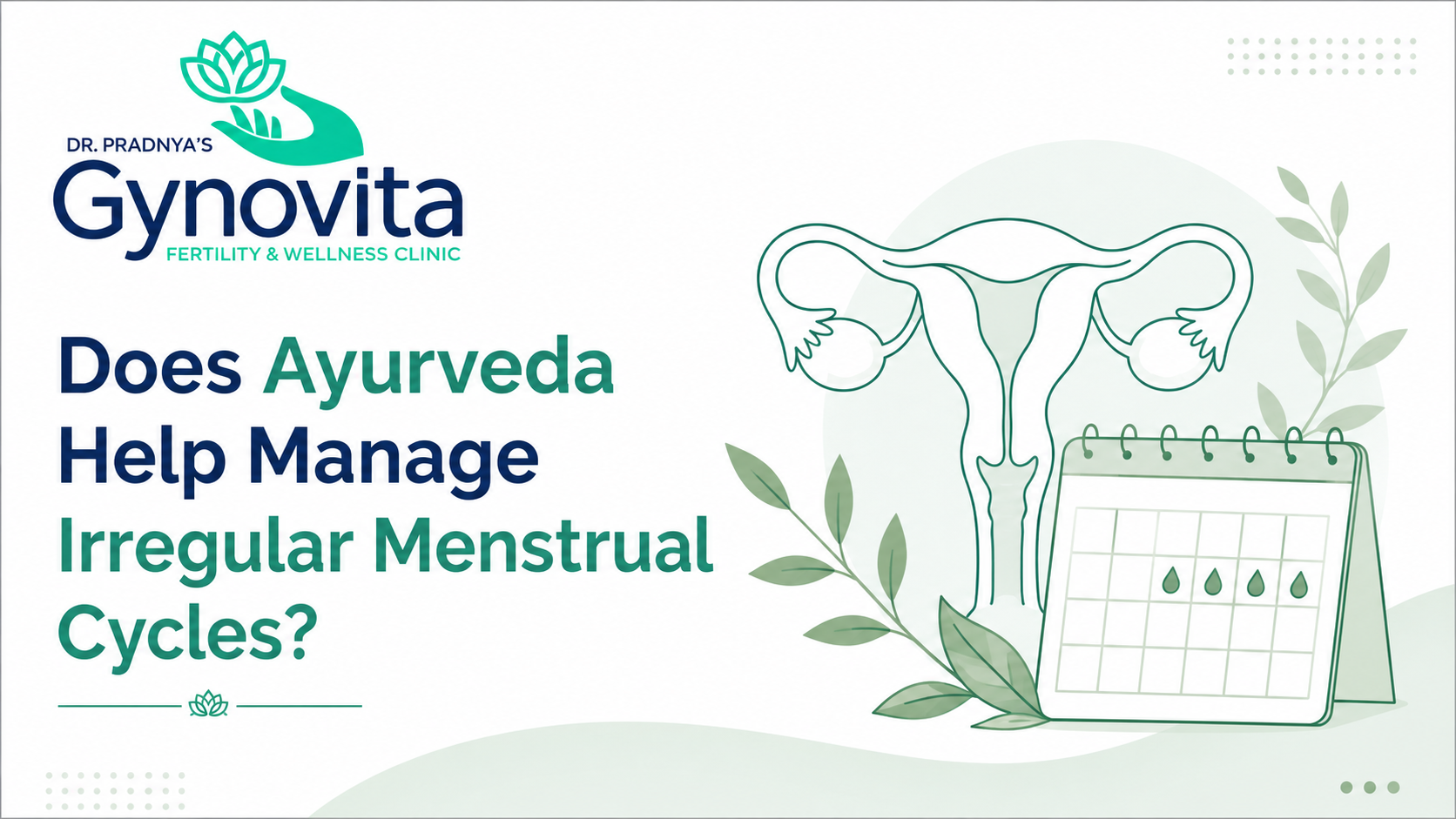
A menstrual cycle is more than just a monthly period. It can provide useful information about a woman’s reproductive and hormonal health. However, when periods arrive earlier than expected, get delayed, become unpredictable or stop for several months, it can create confusion, discomfort and concerns about future pregnancy.
Many women dealing with irregular periods explore Ayurvedic approaches because they want to understand their menstrual health, dietary habits and lifestyle. But an important question remains: Can Ayurveda help manage irregular menstrual cycles, and when should you seek professional guidance?
Ayurveda approaches women’s health through an individualised assessment of diet, digestion, daily routine and overall wellbeing. At the same time, irregular periods can have medical causes such as PCOS, thyroid disorders and hormonal changes that need proper evaluation.
At Gynovita Fertility and Wellness Clinic in Baner-Balewadi, Pune, women can discuss menstrual health and fertility-related concerns with Dr. Pradnya Dole, Ayurvedic Fertility Consultant, and understand possible approaches to reproductive wellness.
Does Ayurveda Help with Irregular Menstrual Cycles?
Ayurveda may offer an individualised approach to supporting general wellbeing through dietary guidance, lifestyle modifications, stress management and practitioner-supervised treatment. However, scientific evidence is currently insufficient to establish that Ayurvedic treatment reliably regulates menstrual cycles or treats every underlying cause of irregular periods.
The first step is to understand why the menstrual cycle is irregular. Depending on the cause, medical investigations or treatment may be necessary. Ayurvedic care should not replace or delay appropriate gynaecological or hormonal evaluation.
What Is Considered an Irregular Menstrual Cycle?
A menstrual cycle is counted from the first day of one period to the first day of the next period. Although cycle length can vary, a typical adult menstrual cycle is approximately 21–35 days.
You may be experiencing menstrual irregularities if:
- Your periods frequently arrive earlier or later than expected.
- The gap between periods changes significantly from month to month.
- You miss periods for several months.
- Your menstrual bleeding becomes unusually light or heavy.
- Your periods last longer than seven days.
- You experience unexpected bleeding between periods.
Occasional changes can happen because of stress, illness, travel or lifestyle changes. However, repeated irregularities should be evaluated rather than assumed to be normal.
Why Do Women Experience Irregular Periods?
Before exploring any treatment approach, it is important to understand what may be affecting the menstrual cycle. Irregular periods can occur due to hormonal, metabolic, reproductive or lifestyle-related factors.
1. Polycystic Ovary Syndrome (PCOS)
PCOS is one of the commonly recognised causes of irregular menstrual cycles. It can affect ovulation and hormone levels.
Women with PCOS may experience:
- Delayed or missed periods
- Acne and oily skin
- Increased facial or body hair
- Weight changes
- Difficulty conceiving
Not every woman with irregular periods has PCOS. A proper clinical assessment is required.
2. Thyroid Imbalance
The thyroid gland plays an important role in regulating several body functions, including reproductive health. Both an underactive and overactive thyroid can affect menstrual patterns.
Women experiencing unexplained cycle changes may be advised to undergo thyroid testing.
3. Stress and Sleep Disturbances
Long-term stress, inadequate sleep and changes in daily routine may influence the hormonal signals involved in ovulation.
Work pressure, emotional stress and inconsistent sleep schedules can sometimes contribute to menstrual changes.
4. Sudden Weight Gain or Weight Loss
Significant changes in body weight, restrictive eating and excessive physical activity can affect reproductive hormone function.
Maintaining balanced nutrition and a sustainable exercise routine is important for overall health.
5. Other Reproductive Health Conditions
Conditions such as endometriosis and certain uterine or ovarian problems may be associated with menstrual symptoms. Their evaluation depends on the symptoms and clinical history.
How Does Ayurveda Understand Menstrual Health?
In Ayurveda, menstrual health is discussed through concepts related to women’s reproductive wellbeing, including Artava and the body’s functional balance.
Traditional Ayurvedic assessment may consider:
- Dosha Balance: Ayurveda considers Vata, Pitta and Kapha when understanding individual health patterns and symptoms.
- Agni (Digestive Function): Digestive function is considered an important part of overall wellbeing in Ayurvedic practice.
- Artava (Menstrual and Reproductive Health): Artava is a traditional Ayurvedic concept associated with menstruation and female reproductive function.
- Dinacharya (Daily Routine): Regular sleep, meals, physical activity and daily habits are considered important components of wellbeing.
These are traditional Ayurvedic concepts and should not be treated as direct equivalents of modern hormonal or gynaecological diagnoses.
An Ayurvedic consultation may consider these aspects alongside the woman’s menstrual history, symptoms and available medical reports.
What Ayurvedic Approaches May Be Discussed for Menstrual Wellness?
Ayurvedic care is generally individualised rather than based on one remedy for every woman. Depending on the consultation and medical history, the following areas may be discussed.
1. Individualised Dietary Guidance
Food habits are an important part of traditional Ayurvedic lifestyle guidance. A balanced diet can also support general metabolic and reproductive health.
Practical dietary considerations include:
- Include vegetables, seasonal fruits and whole grains.
- Add appropriate protein sources such as pulses, beans, dairy or other suitable foods.
- Include healthy fats in balanced quantities.
- Avoid extreme dieting and skipping meals.
- Maintain adequate hydration.
Dietary recommendations should be adapted to individual nutritional requirements and existing medical conditions.
2. Lifestyle and Daily Routine
Irregular sleep and inconsistent daily habits may affect overall health. A sustainable routine may include:
- Maintaining consistent sleeping and waking times.
- Eating meals at reasonably regular intervals.
- Avoiding excessive physical exertion.
- Including moderate physical activity.
- Allowing time for relaxation.
These habits support general wellbeing but should not be presented as a guaranteed treatment for menstrual irregularities.
3. Stress Management
Stress management may be included in an Ayurvedic wellness plan. Depending on individual comfort and health, activities such as gentle yoga, breathing exercises, meditation and relaxation may be discussed.
The purpose is to support emotional wellbeing and healthy daily habits rather than promise a direct hormonal correction.
4. Practitioner-Supervised Ayurvedic Treatment
An Ayurvedic practitioner may discuss suitable formulations or other traditional approaches after reviewing the individual’s health history.
However, herbal medicines are not automatically safe because they are natural. Some preparations may contain potentially harmful ingredients or interact with prescribed medicines.
Avoid self-prescribing Ayurvedic medicines, especially if you are planning pregnancy, undergoing fertility treatment, breastfeeding or taking hormonal medication.
Can Ayurveda Help Women with PCOS and Irregular Periods?
- PCOS can affect ovulation, menstrual regularity and fertility. Women with PCOS may experience delayed periods or long gaps between menstrual cycles.
- Ayurvedic consultations may include discussions about dietary patterns, physical activity, sleep, stress and individualised wellness approaches.
- However, PCOS requires appropriate clinical evaluation. Depending on symptoms, a healthcare professional may recommend hormonal investigations, metabolic assessment, ultrasound or other tests.
- Women planning pregnancy should also discuss ovulation and fertility evaluation. A more regular menstrual cycle alone does not necessarily confirm normal ovulation or guarantee pregnancy.
- Ayurvedic care, if chosen, should be complementary to appropriate medical management.
Which Tests May Be Recommended for Irregular Periods?
The investigations depend on age, symptoms, menstrual history and possible underlying causes.
A healthcare professional may recommend:
| Investigation | Why it may be recommended |
|---|---|
| Thyroid function test | To evaluate thyroid-related changes |
| Hormonal blood tests | To assess selected reproductive hormones |
| Pelvic ultrasound | To examine the uterus and ovaries |
| Pregnancy test | To exclude pregnancy when periods are delayed |
| Blood glucose assessment | To evaluate metabolic health when indicated |
| Other investigations | Depending on symptoms and medical history |
Not every woman requires all these tests. Investigations should be selected according to clinical findings.
Can Irregular Periods Affect Fertility?
Yes, irregular periods can sometimes indicate irregular or absent ovulation, which may make it more difficult to identify the fertile window. For women planning pregnancy, understanding the reason behind irregular cycles is particularly important.
A fertility evaluation may consider:
- Whether ovulation is occurring regularly.
- Hormonal and thyroid health.
- Ovarian and uterine health.
- Fallopian tube-related factors when indicated.
- Male partner’s reproductive health.
If you have been trying to conceive without success, do not rely only on menstrual-cycle tracking or home remedies. A fertility consultation can help identify the next appropriate steps.
When Should You Consult a Doctor for Irregular Periods?
Do not ignore repeated menstrual changes, especially when they occur with other symptoms. Consider seeking medical advice if:
- You miss three consecutive periods.
- Your menstrual pattern changes suddenly.
- Your periods last longer than seven days.
- You experience unusually heavy bleeding.
- You have bleeding between periods.
- Irregular periods occur with unexplained weight changes, excessive facial hair or persistent tiredness.
- You are experiencing difficulty conceiving.
Seek urgent medical attention if you have very heavy bleeding accompanied by dizziness or fainting, severe pelvic pain, or bleeding with a possible pregnancy.
Meet Dr. Pradnya Dole at Gynovita Fertility and Wellness Clinic, Baner-Balewadi
Understanding menstrual irregularities requires attention to individual health, lifestyle and reproductive history. Women may have different reasons for experiencing delayed periods, missed cycles or changes in menstrual flow.
At Gynovita Fertility and Wellness Clinic in Baner-Balewadi, Pune, Dr. Pradnya Dole, Ayurvedic Fertility Consultant in baner, balewadi provides an opportunity for women to discuss their menstrual health and fertility-related concerns.
During a consultation, women can discuss their menstrual history, lifestyle habits, reproductive health concerns and available medical reports. Based on the individual assessment, suitable Ayurvedic wellness guidance and further evaluation may be discussed.
If you are experiencing irregular periods or planning pregnancy, a consultation can help you understand your concerns and make informed decisions about your reproductive health.
Looking for Ayurvedic Guidance for Irregular Periods in Baner-Balewadi, Pune?
Irregular periods should not be managed with the same remedy or approach for every woman. Understanding the underlying reason is an important first step towards appropriate care.
If you are looking for an Ayurvedic Fertility Consultant in Baner-Balewadi, Pune, you can visit Gynovita Fertility and Wellness Clinic to discuss menstrual health, PCOS-related concerns and fertility planning with Dr. Pradnya Dole.
Take the first step towards understanding your menstrual health through an individual consultation and appropriate medical evaluation.